
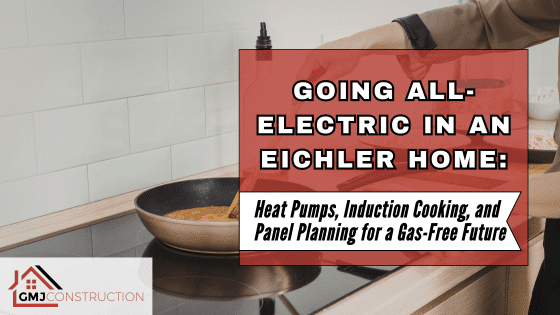
If you own an Eichler, going all-electric can be one of the smartest ways to modernize the home without losing what makes it special.
The open beams, radiant indoor-outdoor feel, and minimalist detailing already lend themselves to a cleaner, more integrated approach to comfort and performance. In many cases, electrification is not about making your home feel more high-tech. It is about making it quieter, healthier, easier to maintain, and better aligned with how you actually live.
If you are starting to explore the shift, the City of Palo Alto’s electrification resources are a helpful resource for understanding the bigger picture. And if you are thinking beyond one appliance at a time, a whole-home Eichler renovation approach usually delivers the cleanest results.
Why Eichlers Are Strong Candidates for Electrification
Eichlers are often better candidates for electrification than homeowners expect. Their original systems are now reaching ages where replacement is already on the table, and that creates the perfect moment to rethink the house as a complete system instead of swapping one old appliance for another.
What makes an Eichler especially well-suited is the opportunity to simplify. Rather than juggling separate gas heating, gas cooking, and gas water heating systems, you can build around a coordinated electric plan that supports comfort, efficiency, and cleaner detailing. The real value is not just in removing gas. It is in designing a home where the electrical plan, HVAC plan, and layout decisions all work together.
A strong electrification strategy usually helps you:
- reduce the number of aging mechanical systems in the home
- improve indoor comfort with more even heating and cooling
- create a cleaner, more modern kitchen experience
- plan for future loads like EV charging, battery backup, or solar integration
- avoid piecemeal upgrades that cost more over time
If your project already includes new finishes, a kitchen remodel, or HVAC work, that is often the best time to evaluate a full Eichler renovation plan instead of treating electrification as a separate project.
Step 1: Electrical Panel Planning for an All-Electric Load
The panel is the backbone of an all-electric Eichler. Before choosing appliances, you need to know what your existing service can actually support. Some homes will need a 200-amp upgrade. Others may be able to electrify successfully with smarter load planning, subpanels, or energy management strategies. The right answer comes from a load calculation, not a guess.
This is where many homeowners either overspend or get stuck. It is easy to focus on the cooktop or heat pump first, but the real planning should start with everything the house may need over the next several years.
Your electrician or design-build team should review:
- existing service size and panel condition
- available breaker space
- future electric loads such as HVAC, water heating, laundry, and EV charging
- whether solar, battery storage, or backup circuits are planned
- meter and main panel location
- utility coordination needs if service changes are required
A good panel plan does more than “make it work.” It creates room for the future. If you know you may add a heat pump water heater now and an EV charger later, those decisions should be made together. That is how you avoid opening walls twice or discovering late in the project that your new kitchen requires a utility delay.
Heat Pumps 101: Heating and Cooling Without Gas
If you are replacing an aging furnace or trying to improve comfort in a home that never quite heated or cooled evenly, a heat pump deserves serious attention. The U.S. Department of Energy’s heat pump systems guide is a useful overview, but the key point for you is simple: a heat pump moves heat instead of creating it through combustion, which makes it an effective all-electric option for both heating and cooling.
For Eichlers, the right system depends on the home’s layout, insulation strategy, and renovation scope. In some cases, ductless mini-splits make sense because they minimize invasive work and allow zoning by room or area. In others, a ducted system works better when the remodel includes enough access and coordination to conceal the infrastructure cleanly.
When evaluating a heat pump system, focus on these questions:
- How will the system fit the house?
Sleek installation matters in an Eichler. You want equipment placement, line routing, and grille locations to respect the architecture. - Do you want room-by-room control?
Zoning can be a major advantage if parts of the house get different sun exposure or are used at different times of day. - Are you pairing HVAC upgrades with envelope improvements?
New insulation, air sealing, glazing decisions, and shading strategies can meaningfully affect system sizing. - Is this a phased project or a full remodel?
If it is phased, choose equipment and routing paths that will not complicate later work.
The biggest mistake here is sizing equipment too early, before the design is settled. Heat pump selection should happen after key decisions about windows, insulation, and layout are clear.
Induction Cooking: Performance and Ventilation Planning
Induction cooking is often the feature homeowners fall in love with once they use it. It feels fast, precise, and surprisingly clean. It also supports the uncluttered, modern kitchen aesthetic that works so well in an Eichler.
Still, induction is not just an appliance swap. It should be treated as part of a kitchen electrical and ventilation plan.
Here is what to think through before installation:
- Dedicated power requirements: your electrical design needs to account for the new cooking load early
- Cookware compatibility: many stainless steel and cast-iron pans work already, but not all cookware will
- Countertop and cabinet coordination: appliance dimensions, clearances, and drawer planning matter
- Ventilation strategy: even without gas combustion, you still need to manage smoke, grease, steam, and cooking odors
This is also a design opportunity. Because induction cooktops typically have a flatter, cleaner profile, they work beautifully in minimalist kitchens. If you are already rethinking cabinetry, lighting, and storage, this is the right moment to integrate the cooking setup into the broader design rather than dropping it into an old layout.
From a daily-living standpoint, induction can be a real quality-of-life upgrade. Faster boil times, better temperature control, and less stray heat in the kitchen can make the space feel calmer and easier to use.
Hot Water: Heat Pump Water Heaters and Placement Considerations
A heat pump water heater is one of the most impactful electrification upgrades, but it is also one that needs careful placement. In an Eichler, that matters because utility zones are often compact, and not every existing water heater location is ideal for a heat pump replacement.
Unlike a conventional gas unit, a heat pump water heater needs more than just a plumbing swap. Placement, airflow, condensate drainage, and sound all need attention. In many homes, the garage or a utility area is the best fit, but the right answer depends on the home’s configuration and the amount of surrounding air volume available.
Before choosing a location, review:
- whether the space has adequate air volume
- how condensate will drain
- whether the sound profile matters near bedrooms or living areas
- whether ducting or louvered solutions may be needed
- how the unit fits into broader remodeling plans
This is one of those upgrades that benefits from early planning. If you wait until the old water heater fails, you may end up making a rushed decision based on the nearest available spot instead of the best long-term location. If your Eichler remodel is already underway, build this into the mechanical layout from the start.
Backup and Resilience: Panel Features and Smart Controls
Electrification works best when it is not just efficient, but resilient. That does not always mean a full battery system on day one. It means designing the house so that backup power, surge protection, and smarter control systems can be added logically.
For many homeowners, resilience planning starts with the panel. A better panel strategy can help you monitor loads, prioritize circuits, and prepare for future upgrades. That is especially useful if you expect to add solar, storage, or EV charging later.
Helpful resilience features may include:
- whole-home surge protection
- designated critical-load circuits
- smart load management
- smart panel monitoring
- battery-ready planning
- transfer equipment for future backup systems
Even if you are not ready to install every feature now, planning for them during a remodel is far cheaper than retrofitting later. This is another reason a coordinated whole-home Eichler remodel plan often outperforms appliance-by-appliance upgrading.
Coordinating Electrification With an Eichler Remodel
Electrification tends to go most smoothly when it is woven into the remodeling sequence. That means electrical rough-in, mechanical planning, finish selections, and utility coordination should be treated as one conversation.
In practical terms, the best sequence usually looks something like this:
- confirm project scope and future appliance list
- complete load calculations and panel strategy
- coordinate HVAC, kitchen, and hot water locations
- align framing, rough-in, and finish work
- schedule inspections and utility steps in the correct order
- complete final appliance installation only after the infrastructure is ready
This sequencing matters because Eichlers do not hide mistakes well. If conduit paths, equipment locations, or venting solutions are improvised late in the project, the result can feel visibly out of place. Thoughtful planning protects both performance and aesthetics.
It also protects your budget. When the electrician, HVAC installer, designer, and builder are working from the same roadmap, surprises tend to shrink.
Permits, Incentives, and Utility Coordination
Permits and utility coordination are where a lot of electrification projects slow down, not because the work is impossible, but because the timing was underestimated. If your project involves a service upgrade, new panel work, HVAC replacement, or water heater replacement, those steps need to be coordinated early with the city and utility.
In Palo Alto, homeowners can benefit from permit pathways and electrification support programs that may streamline certain upgrades. There are also situations where permit fee rebates may apply for switching from gas equipment to electric heat pump systems. On the utility side, PG&E may need to assess whether your service can support the added load and whether any infrastructure work is required before the project can move forward.
A few smart planning rules:
- do not assume incentives will still be available when you are ready to buy
- verify permit requirements before equipment is ordered
- start utility coordination early if the service may change
- build inspection timing into your construction schedule
- ask whether your final all-electric scope should include gas line capping or full gas service disconnect planning
Incentive programs can change quickly, especially for income-qualified or utility-backed electrification work. That is why it is smarter to treat rebates as a bonus, not the foundation of the budget.
Going All-Electric Works Best With a Whole-Home Plan
Going all-electric in an Eichler is not just about replacing gas appliances. It is about building a more coordinated home, where comfort, performance, design, and future flexibility all support each other. When you plan the panel, HVAC, cooking, and hot water systems as one package, the result usually feels cleaner, works better, and costs less to manage over time. If you are considering a kitchen upgrade, mechanical replacement, or broader reconfiguration, this is the ideal time to think in terms of a whole-home Eichler renovation instead of isolated upgrades. The best all-electric Eichlers do not feel over-engineered. They just feel thoughtfully updated. That is the goal.
Takeaway: If you want an all-electric Eichler that feels seamless, start with a whole-home plan, not a single appliance decision.