
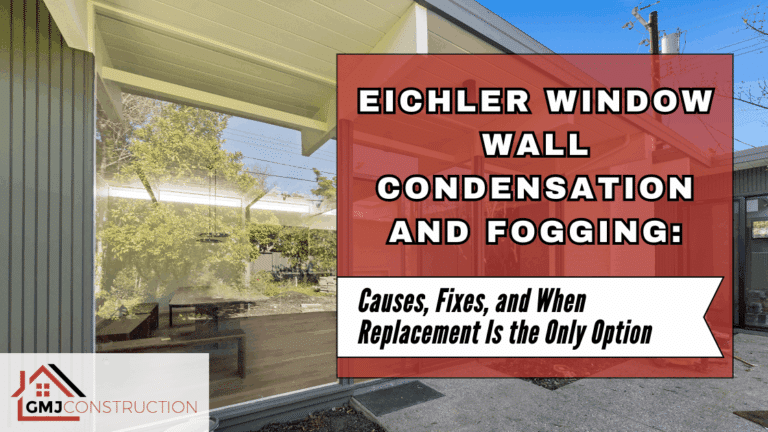
Eichler window walls are among the most beautiful parts of the home, but they can also make moisture problems more visible.
When large sheets of glass meet cool outdoor temperatures, even normal indoor humidity can turn into droplets on the inside surface. In some cases, the issue is simple surface condensation. In others, especially when moisture appears between panes, the glass unit may already have a failed seal.
If you are planning a broader Eichler update, it is worth considering moisture, ventilation, glass performance, and preservation together rather than as separate problems.
GMJ Construction helps homeowners approach these decisions carefully through whole-home Eichler renovations and additions in Palo Alto, with the goal of improving comfort while protecting the clean mid-century modern feel that makes the home special.
For a general moisture context, the EPA’s indoor humidity guidance is also a helpful starting point.
Why Eichler Window Walls Show Condensation Faster Than Standard Windows
Eichler window wall condensation often appears sooner than condensation on standard windows because the glass area is so much larger. A typical room may have a few smaller window openings, while an Eichler living room, atrium-facing space, or rear elevation may have floor-to-ceiling glass. That means there is more cold surface area where warm indoor air can meet cooler glass.
Condensation forms when the interior glass surface drops below the dew point of the indoor air. In plain terms, if your home has enough moisture in the air and the glass gets cold enough, the air releases that moisture as liquid water. ENERGY STAR’s explanation of residential window condensation is useful because it makes the relationship between glass temperature, indoor humidity, and cold weather easier to understand.
For Eichler homeowners, the key point is this: condensation is not always a sign that something is leaking. Sometimes it is a sign that your glass is cold, your indoor humidity is high, or air is not moving well along the window wall.
The Difference Between Surface Condensation and Fogging Between Panes
Before deciding on a fix, look closely at where the moisture is happening.
Surface condensation appears on the room-facing side of the glass. You can usually wipe it away with a towel. It often shows up in the morning, during colder months, after cooking, after showering, or when the home is closed up overnight.
Fogging between window panes is different. If the cloudiness, haze, droplets, or mineral-looking staining is trapped inside a double-pane insulated glass unit, wiping the inside or outside surface will not remove it. That usually points to insulated glass unit failure.
A simple homeowner check:
- If you can wipe it away from the interior surface, it is likely surface condensation.
- If it stays trapped between two panes, it is likely seal failure.
- If moisture is collecting near frames, tracks, or flooring, check for both condensation and possible exterior water entry.
- If the glass looks permanently cloudy even on dry days, replacement may be more realistic than repair.
The Most Common Causes of Condensation on Eichler Window Walls
Window wall condensation usually comes from a combination of conditions rather than one single cause. In an Eichler, those conditions often include cold glass, original or older window systems, limited airflow, and everyday indoor moisture.
Common contributors include:
- Large fixed glass panels that stay colder than surrounding walls
- Older single pane Eichler windows with limited insulating value
- Interior humidity from cooking, bathing, laundry, plants, and daily living
- Furniture, curtains, or shades that restrict airflow along the glass
- Aging sealants or frames that allow cold spots near the edges
- Poor drainage or exterior water paths that add moisture around frames
The goal is not just to make the glass look dry for a day. The better goal is to understand why moisture is forming and whether the window wall system can still perform reliably.
Indoor Humidity, Daily Living, and Cold Glass
If you are wondering how to stop condensation on Eichler window walls, start with humidity. You do not need to make the home uncomfortable or overly dry, but you do want to keep indoor moisture within a reasonable range.
Actionable steps include:
- Use bathroom fans during and after showers.
- Use a kitchen exhaust fan while cooking.
- Avoid drying laundry indoors without ventilation.
- Use a small humidity gauge in rooms with heavy condensation.
- Open windows briefly when outdoor conditions allow.
- Consider a dehumidifier in rooms that stay consistently damp.
This is especially important in winter, when cold glass makes condensation easier to trigger. If your window walls are sweating every morning, your home may be holding more moisture than the glass can tolerate.
Original or Older Single-Pane Glass
Many Eichler homes still have original or older single-pane glass. That glass is part of the home’s character, but it does not perform like modern insulated glass. Single pane Eichler windows tend to feel colder on the interior side, which increases the chance of condensation on Eichler glass walls in winter.
A single pane Eichler window condensation fix may include better ventilation, careful sealing, improved air movement, or selective glass upgrades. However, if the glass is damaged, uncomfortable, inefficient, or constantly wet, the practical answer may be replacement.
The important thing is to avoid a generic window solution that makes the home look like a standard remodel. Eichler glass replacement should be planned around sightlines, frame profiles, indoor-outdoor connection, and the original architectural rhythm.
Airflow Problems Around Large Fixed Panels
Large fixed panels do not benefit from the same natural air exchange as operable windows. When air sits still against cold glass, condensation becomes more likely. This is why glass wall condensation often appears behind furniture, behind heavy window coverings, or in corners where air does not circulate.
Try these adjustments before assuming the window wall needs replacement:
- Pull furniture slightly away from the glass.
- Keep window coverings open during parts of the day.
- Use ceiling fans or quiet floor fans to move air gently.
- Make sure supply vents are not blocked.
- Avoid trapping damp air behind curtains or shades.
Even small airflow improvements can reduce moisture around Eichler window frames.
Fogging Between Panes Usually Means a Different Problem
Fogging between window panes is not the same as condensation on inside of windows. If your Eichler has double-pane glass and moisture appears inside the sealed space between panes, the insulated glass unit may have failed.
This matters because humidity control will not fix moisture trapped inside a failed unit. You can lower indoor humidity, improve airflow, and wipe the glass daily, but the fog will remain because the problem is inside the glass assembly.
Seal Failure Signs Homeowners Can Spot
Failed window seal symptoms can include:
- Hazy glass that does not wipe clean
- Moisture or droplets between panes
- Fog that appears and disappears with temperature changes
- White mineral-like staining inside the glass unit
- A distorted or dirty look even after cleaning both surfaces
Can foggy double pane windows be repaired? Sometimes temporary defogging services can improve appearance, but they do not always restore the original sealed insulating performance. For a high-visibility Eichler window wall, that distinction matters.
Why Defogging Is Not Always a Permanent Fix
Defogging may remove visible moisture from between panes, but it does not always solve the underlying seal failure. If the insulated glass unit has lost its seal, the original performance of that unit has likely been compromised. That is why Eichler glass replacement is often the more sensible long-term fix when fogging is widespread, recurring, or located in a prominent window wall.
For a homeowner, the decision usually comes down to visibility, comfort, age, and cost. A small, low-visibility pane may not justify immediate replacement. A foggy floor-to-ceiling panel in the main living space often does.
Fixes to Try Before Replacing Eichler Window Walls
Not every moisture issue requires full window wall replacement. If the glass is structurally sound and the issue is surface condensation, start with lower-impact fixes.
A practical first round includes:
- Measure indoor humidity for one to two weeks.
- Use fans and ventilation during moisture-heavy activities.
- Improve air movement along the glass.
- Inspect interior sealants and frame edges.
- Check exterior drainage and water paths.
- Look for staining, soft materials, or recurring wet spots near frames.
If these steps reduce the problem, replacement may not be urgent. If condensation continues to pool, damage finishes, or return between panes, it is time to evaluate the window system more seriously.
Control Humidity Without Making the Home Feel Dry
The goal is balance. You want the air comfortable enough for daily living but not so humid that water collects on cold glass. A small digital humidity gauge can help you stop guessing.
If the humidity is consistently high, focus on the source first. Cooking, showers, indoor plants, aquariums, and poor ventilation can all add moisture. Once you understand the pattern, the fix becomes much more targeted.
Improve Air Movement Along the Glass
Because Eichler homes often have long, uninterrupted glass walls, airflow matters. Keep air moving gently across the glass, especially during colder months. This does not need to feel drafty. Even modest circulation can help keep the interior surface drier.
Inspect Frames, Sealants, and Exterior Water Paths
Moisture around Eichler window frames should be taken seriously. Sometimes it is condensation. Sometimes it is exterior water intrusion. Sometimes both are happening together. Inspect sealants, frame joints, drainage conditions, and nearby hardscape. If water is being directed toward the window wall, glass replacement alone may not solve the problem.
When Replacement Becomes the Only Sensible Option
Eichler window replacement becomes the sensible option when the existing system can no longer control moisture, preserve comfort, or maintain appearance. Replacement is especially worth considering when there is failed insulated glass, recurring frame moisture, damaged materials, widespread fogging, or original single-pane glass that no longer supports how you use the home.
Glass-Only Replacement vs. Full Window Wall Replacement
Replacement glass for Eichler floor to ceiling windows may be enough if the frames are sound and the issue is limited to failed or inefficient glass. Full window wall replacement may be better when frames are deteriorated, layouts need correction, water management is poor, or the homeowner wants a more complete performance upgrade.
The right choice depends on what is failing: the glass, the seal, the frame, the installation, or the surrounding wall and drainage conditions.
Replacement Should Preserve the Eichler Look
An Eichler window upgrade without changing the look requires restraint. The goal is not to make the home feel new in a generic way. The goal is to make it more comfortable, more durable, and easier to live in while keeping the glassy indoor-outdoor feel.
A strong mid century modern window replacement plan should respect:
- Thin sightlines
- Large glass proportions
- Natural light
- Clean transitions
- Indoor-outdoor flow
- The home’s original architectural language
What to Ask Before Hiring an Eichler Window Replacement Contractor
Before hiring someone for Eichler home window upgrade work, ask questions that go beyond product selection.
Helpful questions include:
- Have you worked on Eichler or mid century modern glass wall replacement projects before?
- Can you explain whether the issue is surface condensation, seal failure, or water intrusion?
- Will the replacement preserve the original look of the home?
- Are the frames, sealants, drainage paths, and surrounding materials being evaluated?
- Is glass-only replacement enough, or is full window wall replacement more appropriate?
- How will the project improve comfort without changing the character of the home?
The right contractor should be able to discuss moisture, performance, and design preservation together.
Plan an Eichler Window Wall Fix That Solves the Moisture Problem Without Losing the Glassy Feel
Eichler window wall condensation can be frustrating, but it is also useful information. It tells you how your home is handling humidity, airflow, glass temperature, and aging materials. If the issue is surface condensation, humidity control and better air movement may make a meaningful difference. If the issue is fogging between panes, failed seals, or recurring frame moisture, Eichler glass replacement or window wall replacement may be the smarter long-term solution.
The best fix is the one that solves the moisture problem without sacrificing what made you love the home in the first place: the openness, the light, and the unmistakable Eichler connection between indoors and outdoors.