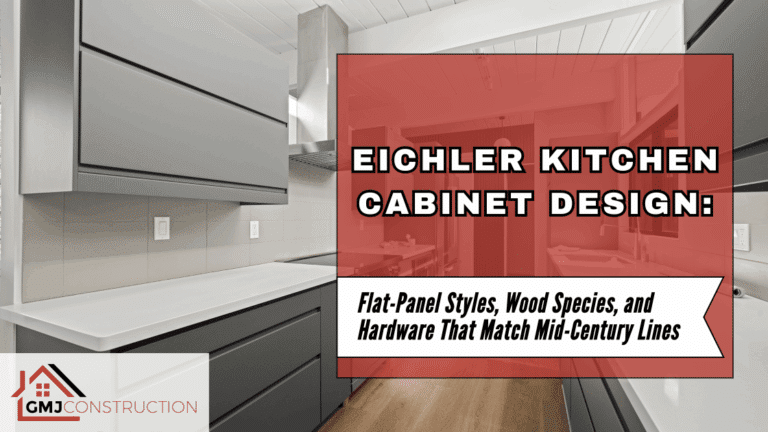
Eichler kitchen cabinet design is about more than picking beautiful cabinet doors. In an Eichler home, the cabinetry needs to support the architecture’s horizontal lines, open sightlines, natural materials, and indoor-outdoor connection.
Because these homes were designed as complete architectural systems, even small choices like door profiles, grain direction, and hardware can either preserve or disrupt the feel of the space. If you are planning an Eichler kitchen remodel, the goal is usually not to make the kitchen look brand new in a generic way.
The better goal is to make it feel original to your home while giving you the storage, durability, and daily functionality you need now.
For a broader look at how cabinet planning fits into the full home, GMJ Construction’s guide to whole-home Eichler renovations and additions in Palo Alto is a helpful next step.
Eichler homes are known for open floor plans, walls of glass, post-and-beam construction, and a strong connection to nature, which makes cabinet design especially visible from multiple angles.
Resources like the Eichler Network and the National Park Service’s discussion of mid-century modern materials and preservation are useful reminders that these homes should be treated as design-sensitive spaces, not ordinary remodel boxes.
Why Eichler Kitchen Cabinets Need a Different Design Approach
Eichler kitchen cabinet design should preserve the home’s clean lines, low visual weight, and material harmony. Standard kitchen cabinets can work beautifully in many homes, but in an Eichler, overly decorative profiles, heavy crown details, ornate pulls, or mismatched finishes can make the room feel disconnected from the architecture.
A successful Eichler cabinet plan usually protects three things:
- Clean lines: Flat cabinet faces help the kitchen align with the home’s post-and-beam rhythm.
- Low visual weight: Simple cabinet forms keep the kitchen from feeling crowded or overly built up.
- Material harmony: Wood tones, finishes, counters, flooring, and glass walls should feel connected.
Cabinet Choices Should Support the Architecture, Not Compete With It
Think of the cabinets as part of the architecture, not furniture placed inside it. Raised-panel doors, heavy moldings, and ornate hardware can make an Eichler kitchen feel traditional, even if the rest of the home is mid-century modern. Flat-panel doors, quiet wood grain, and proportional hardware keep the room calm and architectural.
The Best Eichler Kitchens Feel Updated, Not Rebranded
A strong Eichler kitchen remodel does not need to freeze the home in the 1950s or 1960s. It can include modern appliances, better storage, improved lighting, and more durable materials. The key is restraint. Your kitchen should feel refreshed, not rebranded into a trend that belongs to a different house.
Flat-Panel Cabinet Doors Keep the Kitchen Aligned With Mid-Century Lines
Flat-panel kitchen cabinets are usually the safest starting point for an Eichler kitchen because they reduce shadow lines, decorative breaks, and visual clutter. In long galley kitchens or open-plan spaces, cabinet rhythm matters. A busy door profile can repeat across the room and quickly make the kitchen feel heavier than intended.
The best flat-panel styles include:
- Slab doors: The cleanest and most direct option for an Eichler kitchen cabinet face.
- Veneer-front doors: A strong choice when you want natural wood grain and warmth.
- Recessed-channel doors: A subtle way to add function without traditional pulls.
- Handleless doors: Best for a highly streamlined kitchen, especially with push-latch or integrated hardware.
Slab Doors Create the Cleanest Eichler Cabinet Face
Slab cabinet doors work well because they allow the cabinet run to read as one continuous surface. This is especially helpful when the kitchen is visible from the living area, dining area, or atrium.
Avoid Door Profiles That Add Traditional Detail
Shaker doors can sometimes work in transitional homes, but they often feel too framed for an Eichler. Raised-panel doors are usually even more disruptive because they introduce traditional detailing that competes with the home’s simple geometry.
Use Cabinet Lines to Stretch the Room Visually
Horizontal grain, wide drawer fronts, and long cabinet runs can make a galley kitchen feel wider and calmer. When possible, align upper cabinets, base cabinets, counters, and hardware so the eye moves smoothly across the room.
Choosing Wood Species That Feel Warm Without Looking Heavy
Wood cabinets in an Eichler kitchen should feel warm, natural, and intentional without making the room feel dark or bulky. The best wood species depends on your existing floors, ceiling, beams, wall paneling, natural light, and desired level of contrast.
| Wood or Finish | Best Use | Design Caution |
| Walnut | Adds warmth, depth, and a classic mid-century feel | Can darken the room if used heavily |
| Rift-cut oak | Creates a lighter, linear, modern look | Needs a quiet finish to avoid feeling too busy |
| Teak-inspired veneer | Adds period-sensitive warmth | Can look themed if overused |
| Maple | Keeps the kitchen light and clean | Can feel generic without the right grain and finish |
Walnut Works When the Kitchen Needs Warmth and Depth
Walnut kitchen cabinets can look beautiful in a mid-century kitchen because the color feels rich without needing ornate detail. It works especially well when paired with simple counters, restrained hardware, and plenty of natural light.
Rift-Cut Oak Adds Linear Grain Without Darkening the Room
Rift-cut oak is a smart option when you want visible wood grain but a lighter overall palette. Its straighter grain pattern helps reinforce the horizontal lines that make Eichler interiors feel long, open, and calm.
Teak-Inspired Finishes Can Feel Period-Correct When Used Carefully
Teak-inspired finishes can nod to the original mid-century era, but they should be balanced with restraint. If every surface becomes overly warm or orange-toned, the kitchen can start to feel staged rather than authentic.
Lighter Woods Can Work If the Grain and Finish Stay Quiet
Maple and other lighter woods can work well in Eichler kitchen cabinet design, especially in darker kitchens. The finish should feel soft and natural, not overly yellow, glossy, or flat.
Cabinet Finish Matters as Much as the Wood Species
The cabinet finish can change the entire mood of the kitchen. In most Eichler kitchens, matte and satin finishes usually feel more architectural than glossy, distressed, or heavily textured finishes. They soften large cabinet runs, reduce glare near glass walls, and keep the focus on the home’s lines.
Matte and Satin Finishes Preserve the Architectural Feel
High-gloss finishes can work in some modern kitchens, but in an Eichler, they may feel too reflective next to glass walls, atriums, and open living areas. Matte and satin finishes tend to feel warmer, quieter, and more connected to the home’s original design language.
Grain Direction Should Reinforce Horizontal Lines
For flat-panel doors, grain matching is a premium detail that can make the kitchen feel more custom. Horizontal grain across drawers and cabinet banks helps stretch the room visually, while inconsistent grain can make the cabinetry feel choppy.
Hardware Should Be Minimal, Linear, and Proportional
The best Eichler kitchen hardware is usually slim, linear, low-profile, or integrated into the cabinet door. Hardware should support the cabinet design without becoming the first thing you notice.
Good options include:
- Edge pulls for a clean cabinet face
- Tab pulls for a subtle mid-century detail
- Recessed pulls for a built-in look
- Push-latch hardware for handleless doors
- Slim linear pulls when you want a visible but restrained detail
Edge Pulls Keep the Cabinet Face Clean
Edge pulls are one of the most reliable choices for flat panel cabinets because they provide function without interrupting the door face. They are especially useful on long cabinet runs where visual consistency matters.
Integrated Pulls Create a Built-In Look
Integrated cabinet pulls can make the cabinetry feel designed into the house rather than installed as a separate product. This works well in Eichler kitchens where the cabinets are visible from multiple living zones.
Hardware Finish Should Coordinate With Appliances and Lighting
Matte black, brushed nickel, stainless steel, and restrained brass can all work, depending on the kitchen. The important part is coordination. Oversized farmhouse pulls, ornate knobs, or trendy mixed finishes can distract from the mid-century lines.
Painted Cabinets Can Work, But Color Placement Needs Restraint
Eichler kitchen cabinets do not have to be wood. Painted cabinets can work beautifully, especially when the kitchen needs brightness or when wood tones already appear in the ceiling, beams, flooring, or furniture.
A simple way to think about painted cabinets:
- White cabinets: Bright and clean, but they need warmth from wood, tile, or textured materials.
- Muted colors: Soft greens, blues, grays, and warm neutrals can nod to mid-century palettes without feeling too themed.
- Two-tone designs: Best when there is a clear reason, such as grounding the base cabinets while keeping upper cabinets light.
White Cabinets Need Warm Materials Around Them
White flat panel kitchen cabinets can make a darker Eichler kitchen feel more open, but too much white can feel stark. Wood shelving, warm flooring, natural counters, or textured tile can help keep the room inviting.
Accent Colors Work Best in Controlled Zones
Accent colors are usually strongest when used in one controlled area, such as an island, pantry wall, or lower cabinet bank. This keeps the color intentional rather than overwhelming.
Storage Upgrades Should Stay Hidden Behind Simple Cabinet Faces
Modern storage can make an Eichler kitchen much more functional without adding visual clutter. The trick is to hide the function behind simple cabinet faces instead of adding bulky storage pieces throughout the room.
Consider these upgrades before finalizing cabinet elevations:
- Deep drawer bases for pots, pans, and everyday dishes
- Pull-out pantry storage
- Appliance garages for small appliances
- Built-in trash and recycling pull-outs
- Tray dividers for baking sheets and cutting boards
- Corner solutions that reduce wasted space
Deep Drawers Often Work Better Than Standard Base Cabinets
Deep drawers can be easier to use than standard lower cabinets because they bring items forward instead of forcing you to reach into dark corners. They also create strong horizontal lines that fit Eichler kitchens well.
Appliance Garages Help Maintain Clean Counter Lines
Countertop clutter can quickly interrupt the calm feel of an Eichler kitchen. Appliance garages help keep coffee makers, toasters, mixers, and chargers accessible but visually quiet.
Avoid Overloading the Room With Upper Cabinets
Many Eichler kitchens benefit from a lighter approach to upper storage. Instead of filling every wall with upper cabinets, consider taller pantry storage, deeper drawer bases, or a more focused storage wall.
Bay Area Eichler Kitchens Need Material Choices That Fit Daily Use
A Bay Area Eichler kitchen remodel should respect the home’s architecture while still fitting how you actually live. In Eichler-heavy areas like Palo Alto, Sunnyvale, San Mateo, San Rafael, Walnut Creek, and surrounding communities, many homeowners want upgrades that feel architecturally respectful rather than trend-driven.
Before choosing cabinet materials, consider:
- Your neighborhood’s Eichler character
- The original floor plan and sightlines
- Natural light from glass walls or atriums
- Durability for everyday family use
- Resale expectations among Eichler buyers
- Contractor familiarity with mid-century homes
Local Eichler Experience Helps Avoid Generic Remodel Choices
A contractor who understands Eichler homes can help you avoid cabinet choices that look good in a showroom but feel wrong in the house. Local project photos, similar floor plans, and material samples are especially helpful.
Cabinet Design Should Match Both the House and the Neighborhood
An Eichler kitchen should feel personal to you, but it should also make sense for the home’s larger architectural context. The best designs feel fresh without making the home lose its identity.
Plan an Eichler Kitchen Cabinet Layout Before Picking Finishes
Cabinet finishes should follow the layout, not the other way around. Before choosing wood species, paint colors, or hardware, plan the kitchen’s workflow, appliance zones, storage needs, cabinet elevations, and sightlines.
A strong planning sequence looks like this:
- Confirm the layout.
- Map daily kitchen workflow.
- Decide appliance and sink zones.
- Design cabinet elevations.
- Choose the finish palette.
Start With Workflow, Then Build the Cabinet Elevations
The kitchen should work for the way you cook, clean, gather, and move through the home. Once the workflow is right, the cabinet elevations can be designed to look calm and intentional.
Use Sightlines to Decide Where Cabinets Should Feel Light or Solid
In an Eichler, you may see the kitchen from the living room, dining area, atrium, or backyard. Use those sightlines to decide where cabinets should feel open, where they can feel more solid, and where a material feature should be emphasized.
Design Cabinets That Make the Kitchen Feel Original to the Home
The best Eichler kitchen cabinets feel intentional, not decorative. Start with the right flat-panel profile, choose a calm wood or finish, keep the hardware minimal, and hide modern storage behind simple cabinet faces. When each decision supports the home’s horizontal lines and open feel, the kitchen can become more useful without losing its mid-century character. If you are ready to move from ideas to a plan, GMJ Construction can help you design an Eichler kitchen remodel that respects the original architecture while improving how the space works every day.
Match the Cabinet Plan to the Home Before Ordering Materials
Before ordering cabinets, review the layout, sightlines, wood tones, finish samples, hardware scale, and storage plan together. That extra planning step can make the difference between a kitchen that looks updated and a kitchen that truly belongs in your Eichler.
Eichler kitchen cabinet design works best when it is restrained, functional, and architecture-first. Flat-panel doors, quiet wood grain, matte or satin finishes, slim hardware, and hidden storage upgrades help modernize the kitchen without disrupting the home’s mid-century lines.