
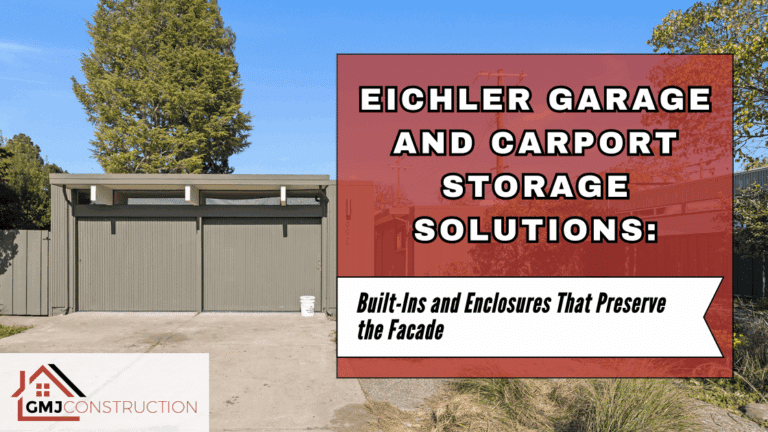
In an Eichler home, the garage or carport is not a background utility space. It is often part of the street-facing composition, which means every cabinet, enclosure, door, screen, and storage wall affects the way the home feels from the curb.
That is why good Eichler garage storage solutions should begin with the facade, not the storage catalog. As the Eichler Network explains in its discussion of Eichler garage doors, the garage can have a major impact on the home’s overall look.
For Bay Area homeowners, the Palo Alto Eichler Neighborhood Design Guidelines are also a helpful reminder that small exterior decisions can either support or distract from Eichler character.
The goal is simple: make the garage work harder without making it look heavier.
Why Eichler Garage and Carport Storage Needs a Facade-First Plan
Facade-first storage means designing garage and carport storage around what is visible from the street, how the siding reads across the front elevation, and whether the new storage keeps the home’s low, horizontal rhythm intact.
A standard garage storage project usually focuses on maximum capacity. An Eichler garage remodel needs a more careful balance:
- Street visibility: Anything near the front opening, driveway, or carport edge becomes part of the first impression.
- Siding continuity: Storage should respect existing siding direction, reveal lines, fascia, and trim.
- Low-profile storage: Built-ins should feel quiet, horizontal, and integrated, not bulky or overbuilt.
The Garage Is Part of the Front Elevation
Many Eichler garages and carports were designed as part of the front elevation, not hidden behind the house. That makes the garage door, carport opening, center post, fascia, and side walls important architectural features.
Storage Should Reduce Clutter Without Adding Visual Weight
The best Eichler exterior storage hides bikes, bins, garden tools, and utility items while keeping the facade calm. Think slim side-wall cabinets, concealed panels, and storage zones that sit behind the visual plane of the front elevation.
Start With What You Need to Store Before Designing Built-Ins
Before choosing Eichler garage built-ins, map out what actually needs a home. This prevents overbuilding and helps your contractor create storage that feels purposeful.
Use this simple planning sequence:
- Inventory everything: Bikes, tools, trash bins, luggage, outdoor cushions, sports gear, holiday boxes, and cleaning supplies.
- Create zones: Keep daily items near the entry path and seasonal items higher or deeper inside.
- Rank access frequency: Bikes and bins should be easy to reach. Long-term storage can be less visible.
- Check clearances: Confirm car doors, bike handlebars, trash-bin lids, and walking paths.
- Consider moisture exposure: Carports and slab-level garages need durable, ventilated materials.
Separate Daily-Use Items From Long-Term Storage
Daily-use storage should be easy to open, grab, and close without turning the garage into a staging area. Long-term storage can be tucked into upper wall bays, side cabinets, or enclosed utility zones.
Plan Around Cars, Bikes, Tools, Trash Bins, and Outdoor Gear
For example, if you need space for two bikes, garden tools, trash bins, and a small workbench, the answer may not be one large cabinet wall. A better Eichler-sensitive plan may use a bike rail along a side bay, low cabinets under a work surface, and a concealed trash-bin recess set back from the front plane.
Built-In Storage That Follows Eichler Lines
The right Eichler garage built-ins should look intentional, simple, and architectural. They should echo the home’s horizontal lines rather than compete with them.
Best built-in options by storage need:
| Storage Need | Best Eichler-Friendly Solution |
| Tools and hardware | Low horizontal cabinets with flat-panel doors |
| Bikes | Wall-mounted rails aligned with posts or wall bays |
| Seasonal storage | Upper cabinets set away from the front opening |
| Utility items | Hidden access panels or flush utility closets |
| Garden gear | Slim side-wall cabinets with durable finishes |
Low, Horizontal Cabinets That Keep the Space Calm
Low cabinets can follow the same visual language as Eichler siding and beams. Flat-panel doors, simple pulls, and long horizontal proportions help the storage blend in.
Vertical Storage That Aligns With Posts, Beams, and Wall Bays
Vertical storage works best when it aligns with existing posts, beams, or structural bays. Random tall cabinets can make the garage feel crowded, but aligned storage can feel like it was always part of the home.
Floating Shelves, Slat Walls, and Hidden Utility Panels
Floating shelves and slat walls can work well when they are restrained. Keep them organized, use consistent spacing, and conceal messy utilities behind flush panels where possible.
Carport Storage Without Losing the Open Eichler Feel
Eichler carport storage should solve clutter without making the carport feel like a closed box. The open rhythm, visible depth, and lightness of the structure are part of the appeal.
| Do | Don’t |
| Use side-wall storage | Add bulky front-facing boxes |
| Match siding and panel proportions | Install mismatched sheds |
| Keep storage set back from the street | Block the open carport depth |
| Use slim garden or bike closets | Overfill the front elevation |
| Plan drainage and ventilation | Trap moisture behind cabinets |
Side-Wall Cabinets and Storage Screens
Side-wall cabinets are often the cleanest solution because they move clutter out of the front view. Storage screens can also hide bins, hoses, and tools while preserving airflow.
Partial Enclosures That Hide Clutter but Keep Depth
A partial enclosure can work when it hides the messy zone without closing off the entire carport. For example, a narrow utility screen near the side wall can conceal trash bins while keeping the main carport opening open and light.
Weather-Resistant Materials for Exposed Storage
Carport storage needs to handle sun, moisture, and temperature changes. Use exterior-rated materials, keep cabinetry off the slab where possible, and allow ventilation behind panels.
When an Eichler Carport Enclosure Makes Sense
Yes, you can enclose an Eichler carport, but only if the enclosure respects the roofline, siding, posts, garage-door proportions, ventilation, drainage, and local permit rules. The wrong enclosure can make the home look patched together. The right one can add function while preserving the original rhythm.
Full Enclosure vs. Partial Enclosure
A full Eichler carport enclosure may make sense if you need secure storage, a true garage, or weather protection. A partial enclosure may be better if your main issue is visual clutter. In many cases, a partial side-wall enclosure gives you the practical benefit without sacrificing the open feel.
Matching Rooflines, Siding, Fascia, and Garage Doors
Any enclosure should match the original roofline, fascia depth, siding direction, and panel proportions. If a new garage door is added, a flush or siding-faced door is usually more compatible than a raised-panel or ornate door.
Permit and Planning Review Considerations
Bay Area Eichler carport enclosure projects may require local review, especially if they involve exterior changes, structural work, added walls, electrical upgrades, drainage changes, or new enclosed square footage. Before you build, check city rules and speak with a contractor familiar with Eichler homes and local permitting expectations.
Garage Doors, Siding, and Facade Continuity
Garage doors can make or break an Eichler garage remodel. Because they sit so visibly on the front elevation, generic doors often look too busy, too decorative, or too disconnected from the rest of the house.
Facade continuity checklist:
- Siding direction matches the home
- Reveal lines feel intentional
- Door proportions stay simple
- Center posts and structural rhythm are respected
- Fascia remains clean and minimal
- Color supports the overall palette
- Hardware is simple and understated
Why Generic Garage Doors Usually Clash
Raised panels, arched windows, decorative trim, and heavy hardware usually fight against Eichler design. Eichlers tend to look best with flat, flush, simple surfaces.
How Matching Siding Helps Storage Upgrades Disappear
When garage doors, storage panels, or enclosure walls use siding that matches the home, the upgrade becomes quieter. Instead of announcing itself as new construction, it supports the original facade.
Preserve the Center Post and Structural Rhythm
The center post is not just a visual divider. In many Eichler garages, it is part of the structural and architectural rhythm. Any plan that changes it should be reviewed carefully before construction.
Materials That Work for Eichler Garage and Carport Storage
Choose materials that are durable, simple, and visually consistent with the home.
| Material | Best Use | Design Note |
| Painted wood | Interior garage cabinets | Keep profiles flat and minimal |
| Marine-grade plywood | Moisture-prone storage zones | Seal edges carefully |
| Powder-coated metal | Bike storage, brackets, utility rails | Use simple, slim hardware |
| Composite panels | Exposed carport storage | Good for weather resistance |
| Slatted screens | Trash bins, garden tools, utility zones | Match spacing to Eichler lines |
Wood, Metal, and Composite Panels
Wood can feel warm and authentic, metal can add durability, and composite panels can handle exposure. The key is to avoid ornate cabinet faces, heavy trim, and materials that feel visually unrelated to the house.
Moisture, Ventilation, and Floor Clearance
Garage and carport storage should not trap moisture against the slab or siding. Use floor clearance, breathable gaps, and durable finishes in areas exposed to rain, fog, irrigation, or wash-down water.
Hardware That Stays Minimal
Choose recessed pulls, slim edge pulls, or simple modern hardware. The less decorative the hardware, the more compatible it will feel with the Eichler facade.
Local Design and Permit Issues Bay Area Eichler Owners Should Check
Small interior storage may be simple, but exterior alterations, enclosures, siding changes, electrical work, or garage remodels may require local review. This is especially important in Eichler neighborhoods where character, rooflines, and facade consistency matter.
Check City Rules Before Changing the Exterior
Before enclosing a carport, replacing garage doors, altering siding, or adding electrical components, check your local building department’s requirements. Palo Alto, San Mateo, and nearby cities may treat structural changes, exterior work, and garage alterations differently depending on the scope.
Neighborhood Character Matters in Eichler Tracts
Even when a project is allowed, it should still feel appropriate for the tract. A storage upgrade that looks clean, horizontal, and original to the home will usually age better than one that simply adds capacity.
A Practical Storage Plan for Preserving the Eichler Facade
The smartest order is to solve visibility first, storage second, and added square footage last.
Step 1: Inventory What Is Visible From the Street
Stand at the curb and look at the garage or carport as a visitor would. Note exposed bins, bikes, tools, mismatched doors, and visual clutter.
Step 2: Move Storage to Side Bays and Hidden Planes
Shift storage away from the front opening when possible. Side-wall built-ins, recessed panels, and screened utility zones usually feel cleaner than front-facing storage boxes.
Step 3: Match Materials Before Adding More Square Footage
Before expanding or enclosing, see whether matching panels, siding-faced storage, or better cabinet planning can solve the issue. In many Eichler homes, a cleaner material strategy does more than extra space.
Step 4: Bring in an Eichler-Sensitive Contractor
A contractor familiar with Eichler homes can help you protect the roofline, siding rhythm, center posts, drainage, ventilation, and front elevation. For larger updates, explore GMJ Construction’s experience with whole-home Eichler renovations and additions in Palo Alto to plan storage as part of a larger architectural strategy.
Preserve the Facade While Making the Garage Work Harder
The best Eichler garage storage solutions make daily life easier without making the home look less like an Eichler. With the right built-ins, carport storage, garage doors, siding details, and enclosure planning, your garage can become more functional while still feeling original to the home.
If you are planning Eichler garage built-ins, carport storage, or a facade-sensitive enclosure, contact GMJ Construction to create a storage plan that respects your home’s original lines and supports the way you actually live.
Treat your Eichler garage or carport as part of the architecture, not just a place to store things. When storage follows the home’s lines, materials, and street-facing rhythm, you can gain function without sacrificing the facade.