
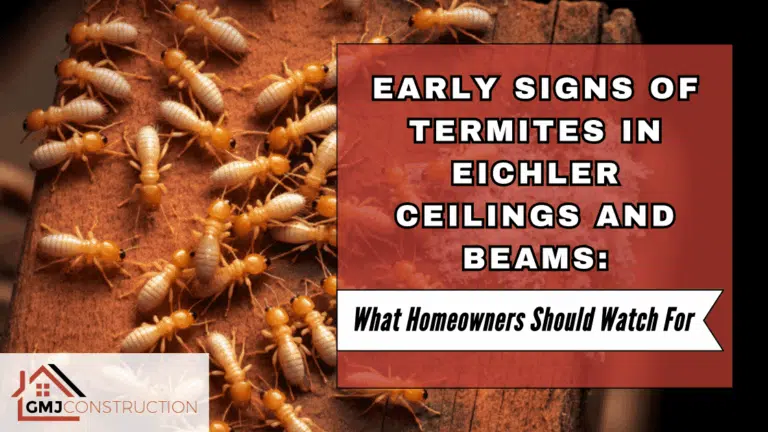
Eichlers are some of the most joyful homes to live in, light-filled, honest in materials, and beautifully simple.
That same “honest” construction also means the first hints of termite activity can show up in the very features you love most, exposed beams and wood ceilings, so catching early signs matters.
Understanding the Unique Vulnerability of Eichler Homes to Termite Infestation
As the owner of GMJ Construction, I have walked hundreds of Eichlers across the Bay Area, and the pattern is consistent. Eichlers are defined by post-and-beam structure, expansive glazing, and wood-forward interiors where the ceiling and structure are part of the design, not hidden behind layers. If you want a quick refresher on what makes these homes distinctive, this overview is a solid baseline: Making an Eichler Meet California’s Energy Codes.
Why does this matter for termites?
- More visible wood, more visible clues. Exposed beams and tongue-and-groove ceilings make it easier to spot subtle changes early.
- Moisture tells the story. Any roof leak, atrium drainage issue, or plumbing seep that elevates moisture near wood can create conditions termites prefer.
- Details collect evidence. Beam pockets, ceiling seams, and transitions around skylights or clerestories can reveal early staining, blistering, or tiny pellet piles.
My goal in this guide is to help you recognize what is normal aging versus what deserves a professional inspection.
Why Termites Target Eichler Ceilings and Beams
Termites are not drawn to “Eichler” as a style. They are drawn to wood plus access plus the right environment, especially moisture.
Here are the most common drivers we see in real projects:
1) Moisture problems, especially from roofs and atriums
Low-slope roofs and skylight details can be perfectly durable when designed and maintained well, but any ongoing seepage can quietly raise moisture content in the decking and beams. Pro tip: if your ceiling has ever shown a stain, even a small one, do not treat it as cosmetic until you know the cause is resolved.
Actionable step:
- After heavy rain, do a 10-minute walkthrough: atrium drains, skylight corners, beam lines, and any ceiling penetrations.
2) Exposed beams and structural joints
Eichlers have elegant beam rhythm. Those joints and transitions can also be locations where tiny gaps, hairline cracks, or finish failures develop over decades. Termites exploit access, then stay hidden.
Actionable step:
- Use a bright flashlight and inspect beam-to-ceiling seams and beam ends. Look for tiny openings, surface bubbling, or new hairline separation.
3) Typical entry points around the perimeter
Cracks in concrete, utility penetrations, and landscape conditions that keep soil wet near the foundation can increase risk, especially for subterranean termites.
Actionable step:
- Keep wood and debris away from the perimeter, maintain drainage, and correct any areas where water pools next to the house.
If you want a general prevention checklist that applies well to Eichlers, this is a reliable reference: US EPA guide to termite prevention and control.
The Most Common Early Signs of Termite Activity in Eichler Homes
Early signs are often small. In a wood-ceiling house, “small” is your advantage because you can catch issues before they become structural.
Small holes in ceiling wood
In drywood termite activity, you may see tiny “kickout” holes where pellets are pushed out. In Eichlers, those holes can show up in tongue-and-groove boards, beam faces, or trim near transitions.
Pro tip:
- Mark the spot with painter’s tape and take a photo. If you see fresh debris reappear after cleaning, that is meaningful.
Mud tubes on beams, walls, or foundations
Subterranean termites often build shelter tubes. In an Eichler, they may travel up a foundation wall, behind trim, or along less-visible edges.
Actionable step:
- Check the foundation line, garage edges, and any areas where stucco or siding meets slabs or planters.
Frass (termite droppings)
Drywood termite pellets are often the clue homeowners notice first. They can look like tiny grains that collect on windowsills, floors, or the tops of baseboards.
Actionable step:
- Vacuum the pellets, then check again in a few days. New accumulation suggests ongoing activity.
Clicking or tapping sounds inside woodwork
Most of the time, you will not hear termites. But in some cases, tapping or faint clicking can occur when termites are disturbed.
Actionable step:
- If you hear recurring tapping near the same beam or ceiling area, document time and location. Then schedule an inspection.
Sagging or warped ceilings and beams
A slight wave in a ceiling plane can be moisture, movement, or prior repair work. But if sagging is new, spreading, or paired with staining or softness, take it seriously.
Pro tip:
- Use a straight edge or laser line if you have one. Subtle changes are easier to see when you measure.
How to Identify Damage: Visual and Physical Clues Homeowners Should Not Ignore
You do not need to be an expert to do a smart first check. You just need a careful process.
1) Tap tests and probing for hollow spots
One of the simplest homeowner checks is tapping wood and listening for hollow changes. You can also gently probe with a screwdriver in suspect areas, especially where wood looks blistered or thin.
Actionable step:
- Choose 3 to 5 “zones” to check: around skylights, near atrium corners, along the perimeter beam line, and any area that has shown moisture in the past.
2) Blistering paint or surface darkening on beams or ceilings
Paint that bubbles, blisters, or looks uneven can be a moisture signal, and moisture often overlaps with termite risk.
Pro tip:
- Do not repaint and move on. Treat finish changes as information.
3) Unexplained cracks along beam lines or ceiling seams
Eichlers can develop hairline cracks over time from movement and temperature cycles. What matters is change.
Actionable step:
- Take “date stamped” photos from the same angle once a month for two to three months if you are unsure. Movement trends tell the truth.
4) Visible swarms of winged termites indoors, or piles of shed wings
Swarmers do not automatically mean your home is infested, but indoor swarms or repeated wing piles near windows and lights are a strong signal to inspect.
Actionable step:
- Save a sample if possible and schedule a professional identification. Correct species identification shapes the treatment plan.
Differentiating Between Termite Damage and Other Types of Wood Deterioration
Termites are not the only reason wood changes. If you want to make good decisions, you need to separate three common culprits: termites, wood rot, and carpenter ants.
Wood rot vs. termite damage signs
Wood decay fungi typically require moisture. Rot often shows as softened, spongy, or stringy wood with discoloration. Termite damage more often presents as hollowed internal galleries that can leave the surface deceptively intact.
Actionable step:
- If you find soft wood, ask two questions immediately:
- Where is the moisture coming from?
- Is there evidence of insects, such as tubes, pellets, or live activity?
Carpenter ants vs. termites identification
Winged ants and winged termites are commonly confused. Ants tend to have a narrow waist and different wing proportions. Carpenter ants can also leave debris that looks more fibrous, more like sawdust, rather than the pellet-like frass associated with drywood termites.
Helpful reference:
Fungal damage appearance compared to termites
Sometimes the story is both. Moisture creates conditions for fungi and also raises termite risk. In an Eichler, that is why roof integrity and drainage are not “maintenance,” they are preservation.
Actionable step:
- If you have a recurring leak history, consider a whole-system review: roof, skylights, atrium drains, grading, and ventilation.
What To Do If You Suspect Early Signs of Termites in Your Eichler Ceiling or Beams
If you suspect termites, your first goal is not to panic. Your first goal is to protect the house by getting the diagnosis right.
Step 1: Stop disturbing the area and document what you see
- Photograph pellets, tubes, staining, and any holes.
- Note location, date, and whether it is changing.
Pro tip:
- If you found pellets, clean them once, then check again after a few days. Fresh accumulation is valuable information.
Step 2: Schedule a professional termite inspection
A trained inspector can identify species and estimate scope. Ask them to explain:
- What evidence supports the diagnosis
- Whether the activity appears active or historic
- What areas were inaccessible and what that means for confidence
If you want a homeowner-friendly baseline for identification and control, bookmark these:
Step 3: Address moisture and access points immediately
Even before treatment, you can reduce risk by fixing the conditions that help termites thrive:
- Repair leaks quickly
- Improve drainage and keep soil near the foundation drier
- Keep vents clear and avoid storing wood against the house
- Seal obvious cracks and utility gaps where appropriate
The EPA’s prevention guidance is a practical checklist here: US EPA guide to termite prevention and control.
Step 4: Plan repairs with Eichler preservation in mind
Termite treatment is only half the battle. The other half is restoring the beams, decking, and finishes in a way that respects the era.
At GMJ, when we open up ceilings or beam areas for repair, we often look for opportunities to make the home safer and more comfortable long-term, especially if you plan to stay in the home for decades.
If that is you, take a look at our guide on aging-in-place universal design upgrades for Eichlers and consider bundling smart, subtle improvements while the right areas are already accessible.
Protecting Your Eichler Home – Stay Alert for Early Signs of Termites and Act Quickly!
Eichlers reward attentive ownership. If you notice pellets, tubes, blistering finishes, new cracks, hollow-sounding wood, or indoor swarms, treat it as a prompt to investigate, not a reason to spiral. The takeaway is simple: document what you see, get a professional diagnosis, eliminate moisture drivers, and repair the home with the same care that made you fall in love with it in the first place.