
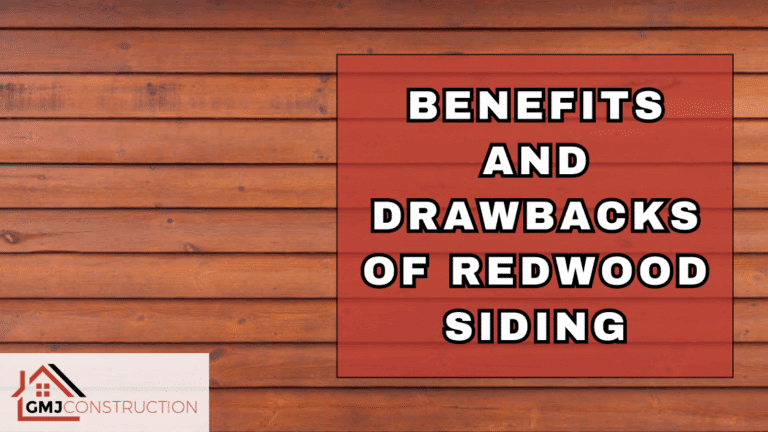
Last reviewed: September 2026. Redwood siding can give a Bay Area home warmth, dimensional depth, and a natural finish that works especially well with Eichler and mid-century architecture. Its performance, however, depends on the grade, profile, exposure, installation details, finish, and maintenance plan—not simply the species name.
This guide explains the benefits and drawbacks of redwood siding, what affects redwood siding cost, how clapboard and other profiles differ, and when restoration may be more appropriate than complete replacement.

What Is Redwood Siding?
Redwood siding is exterior wall cladding manufactured from coast redwood. It is available in several grades and profiles, including horizontal lap or clapboard boards, vertical boards, tongue-and-groove products, channel patterns, and trim components. The profile changes how water sheds, how shadows read across the facade, and how closely a repair matches the original architecture.
The distinction between heartwood and sapwood is also important. Redwood heartwood contains naturally occurring extractives associated with greater decay resistance, while sapwood is less durable when exposed to moisture. Grade, moisture content, milling quality, fastening, back-priming or sealing, and the wall assembly all influence actual service life.
Benefits of Redwood Siding
Natural appearance that suits mid-century architecture
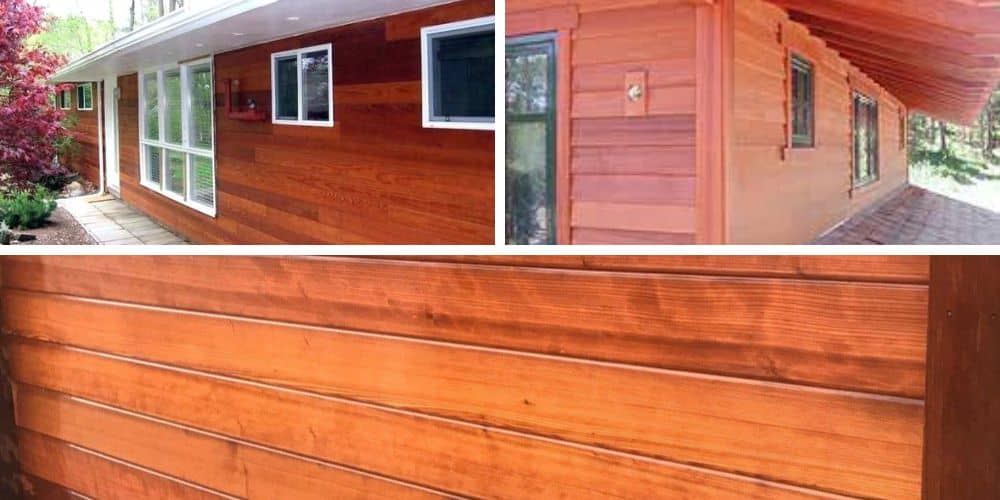
Redwood has a recognizable grain and warm color range that can complement exposed beams, natural ceiling boards, concrete, glass, and other materials common in Eichler homes. It can be finished to retain a wood tone or allowed to weather under a maintenance plan that accepts a more muted appearance.
Dimensional stability
Redwood is valued for dimensional stability, meaning properly selected and installed material can remain comparatively stable as environmental conditions change. The U.S. Forest Service Wood Handbook identifies redwood as a material used for exterior siding and discusses its dimensional stability and durability. Installation still needs to allow for normal movement and drainage.
Workability and profile flexibility
Redwood can be milled into profiles that work with both traditional and modern facades. This flexibility is useful when a project needs to reproduce a specific reveal, continue horizontal lines, repair isolated boards, or coordinate siding with fascia, soffits, screens, and exterior trim.
Repair potential
When damage is localized and a compatible profile can be sourced, individual boards or sections may be repairable. This can preserve more original material and reduce unnecessary demolition. A successful repair requires a close match in thickness, width, edge profile, grain, and finish.
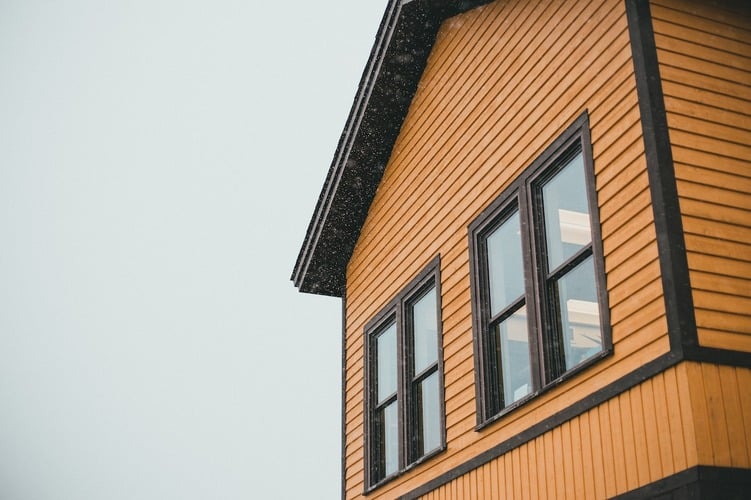
Drawbacks of Redwood Siding
Material quality is not uniform
The word “redwood” does not describe a single performance level. Heartwood content, grade, growth characteristics, defects, moisture content, and manufacturing quality vary. A lower initial price may reflect a different grade or appearance standard than the material being compared.
Regular finish and moisture management
Exterior wood changes under ultraviolet exposure, rain, irrigation, and repeated wetting and drying. Clear finishes, stains, and painted systems have different maintenance cycles. No finish compensates for missing flashing, poor drainage, sprinklers directed at the wall, soil contact, or trapped moisture behind the boards.
Color matching can be difficult
New boards rarely match weathered siding immediately. Existing wood may have darkened, faded, absorbed finish unevenly, or been repaired with a different grade. A test area helps establish whether cleaning, sanding, staining, or a more opaque finish can create an acceptable result.
Cost and availability
Redwood siding cost varies considerably. Material grade, heartwood content, profile, board dimensions, sourcing, waste, access, demolition, wall repairs, flashing, finish work, and the amount of custom matching can all affect the proposal. For that reason, a generic square-foot price is less useful than a scope that states exactly what material and installation details are included.
Fire and code considerations
Wood siding may be subject to local building, ignition-resistant construction, and wildfire-area requirements. The applicable rules depend on the property, jurisdiction, assembly, and product. Homeowners should not assume that an existing material can automatically be replaced in kind without confirming current requirements.
Redwood Clapboard Siding and Other Profiles
Redwood clapboard siding uses overlapping horizontal boards to shed water and create distinct shadow lines. The exposed board height, overlap, thickness, and corner details determine the visual scale.
Vertical siding can emphasize height and may be used with battens, channels, or flush joints depending on the design. It requires an assembly that drains and dries correctly behind the boards.
Tongue-and-groove or channel profiles can create a flatter, more continuous surface associated with modern architecture. Because the joints are visually prominent, careful layout and moisture detailing are essential.
When working on an Eichler or another mid-century home, document the existing profile before ordering replacement material. Even a small change in board width or reveal can alter the facade’s horizontal rhythm.
Redwood Siding Cost: What a Useful Proposal Should Include
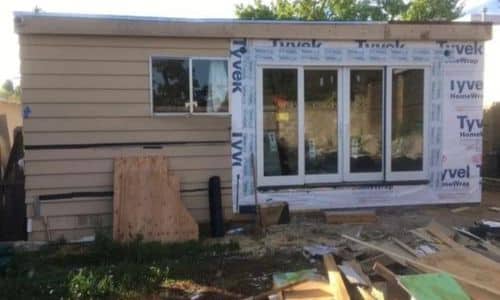
A siding proposal should separate material choice from the work needed to create a durable wall. Ask whether the scope includes:
- Removal and disposal of existing siding
- Protection of windows, doors, landscaping, and occupied areas
- Inspection and repair of sheathing, framing, and damaged trim
- Weather-resistant barrier and flashing details
- Ventilation or drainage space where required by the assembly
- Exact redwood grade, profile, dimensions, and acceptable defects
- Fastener type and placement
- Back, edge, and field finishing requirements
- Corner, opening, fascia, soffit, and transition details
- Primer, stain, paint, or clear-finish system and number of coats
- Access, scaffolding, permits, cleanup, and warranty terms
Two proposals with different prices may not describe the same wall assembly. Comparing these line items is more reliable than comparing a single total.
Restore or Replace Redwood Siding?
Restoration may be practical when the boards remain structurally sound and the main problems are surface weathering, failed finish, isolated damage, or limited open joints. Replacement becomes more likely when decay is widespread, boards are split or distorted, the wall lacks needed flashing, moisture has damaged underlying materials, or matching repairs would cover most of the elevation.
A condition assessment should distinguish cosmetic weathering from active deterioration. Gray color alone does not prove that siding has failed, while a freshly coated surface can still conceal moisture damage. Probe suspect areas, inspect lower wall edges and window transitions, and trace the source of staining before selecting a scope.
Redwood Siding Maintenance Checklist
- Review the manufacturer’s requirements for the installed finish system.
- Keep soil, mulch, and stored materials away from the bottom edge.
- Redirect sprinklers that repeatedly wet the siding.
- Check window, door, roof, deck, and wall penetrations for failed sealant or flashing.
- Look for peeling finish, open joints, cupping, soft spots, and insect activity.
- Clean gently; aggressive pressure washing can damage wood fibers and force water into the wall.
- Test cleaning and finishing products in a small, inconspicuous area.
- Address the moisture source before replacing a damaged board.
Redwood Siding for Eichler and Mid-Century Homes
On a mid-century facade, siding is part of the architecture rather than a background material. Board direction, reveal, stain color, corner treatment, and the relationship to beams and glass influence whether a repair feels integrated. A successful update can improve durability while preserving the clean lines that make the home recognizable.
GMJ Team Experts can evaluate the existing material, identify repair and replacement areas, and develop a scope that coordinates siding with flashing, trim, paint or stain, and adjacent building components. Learn more about GMJ Construction’s siding installation services, review its broader Eichler remodeling approach, or request a consultation.
This article provides general information. Material suitability, fire requirements, weather protection, structural conditions, installation details, and permit obligations must be confirmed for the specific property by qualified professionals and the applicable local authority.